
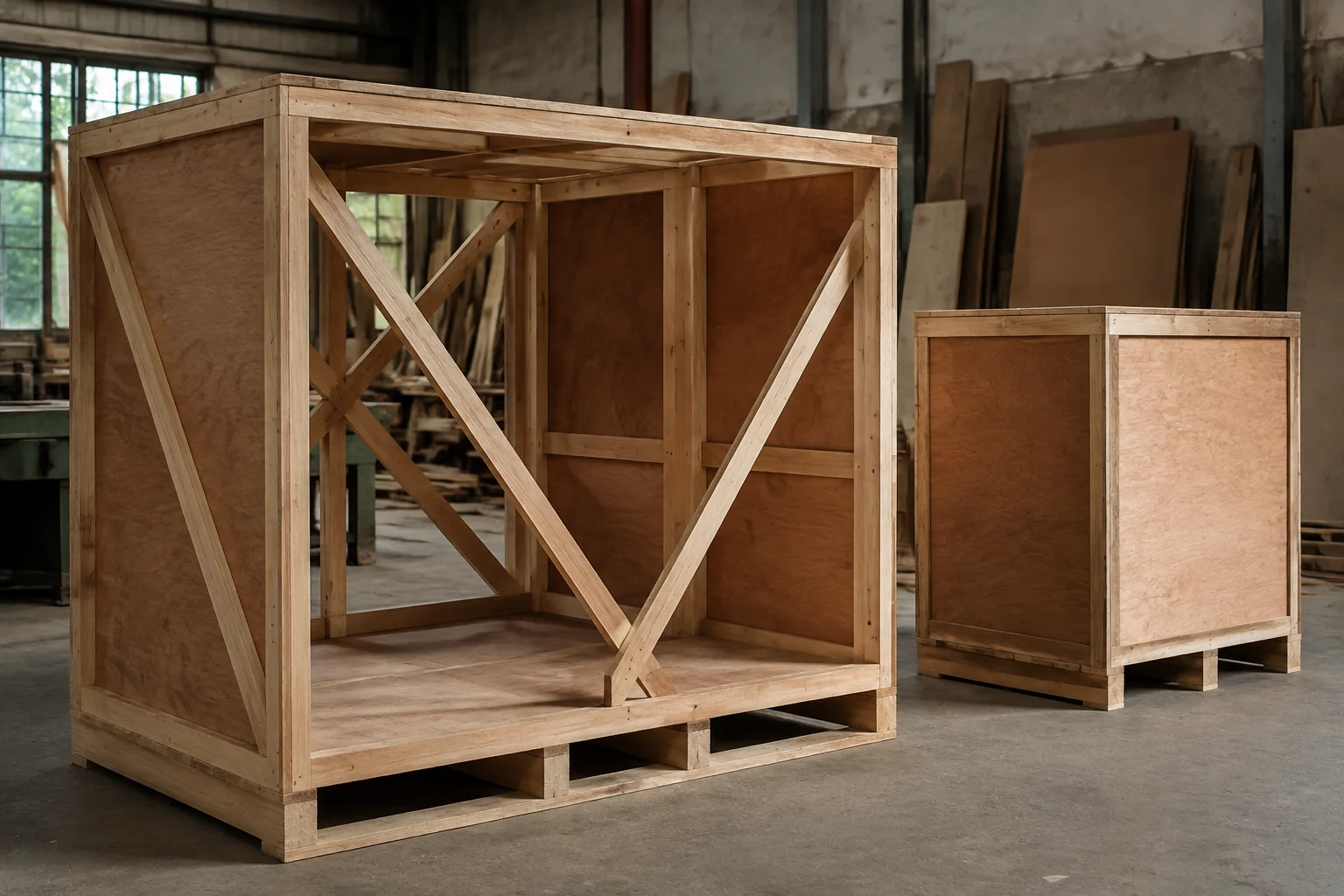
Container and break-bulk shipments can expose a packed machine to different handling and weather conditions. Choose the packing design from the actual shipping plan. Cargo weight, container size or destination alone does not determine the crate's wall thickness, supports or lifting arrangement.
What changes with the transport plan
| Question | Container shipment | Break-bulk shipment |
|---|---|---|
| Loading and access | Confirm door opening, internal clearances, loading equipment and unloading access. | Confirm each transfer and the carrier's handling and stowage requirements. |
| Exposure | Confirm moisture protection and conditions before loading and after unloading. | Confirm whether cargo may be exposed during storage, transfer or the voyage. |
| Support and securing | Check the load distribution and securing plan against the selected container and carrier requirements. | Agree the support, restraint and securing interfaces for the selected vessel and handling plan. |
| Stacking | State whether stacking is allowed; do not assume it. | State permitted stowage and stacking in the approved plan. |
A container does not remove the need to assess the packed load. Its floor, securing points and operating limits must be checked for the proposed arrangement. Obtain the carrier's current limits for the equipment being used.
Agree the design responsibilities
The equipment owner should identify its weight, centre of gravity, support points and handling restrictions. The responsible packing designer should specify the case, internal restraint and handling interfaces. The forwarder and carrier should confirm that the proposed packed unit can be accepted on the route.
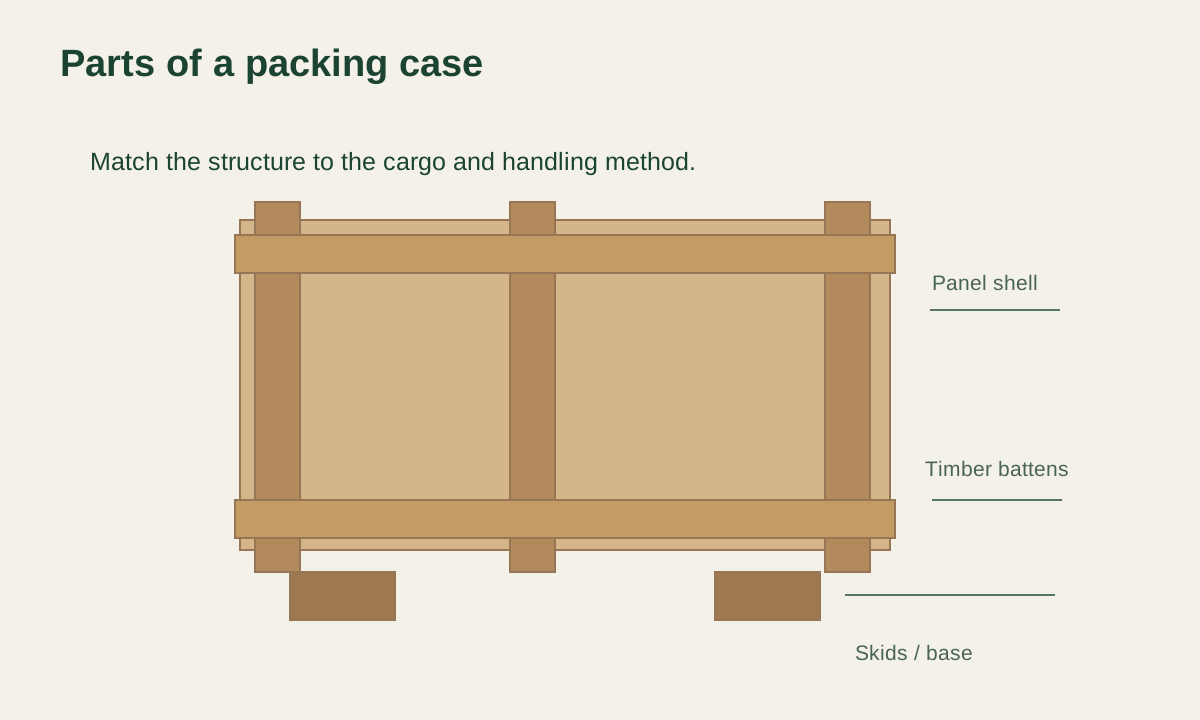
Keep those requirements together on an approved drawing or packing instruction. Board thickness, skid dimensions, fasteners and lifting hardware need a design basis for the complete assembly. A plywood grade or a general internet table is not a lifting approval.
Illustrative route comparison
A buyer considering an enclosed container and an exposed transfer route for the same machine would ask how each proposal protects the cargo during storage, transfer and receipt. If the handling method changes, the packing designer must reassess the proposal. This example illustrates the questions to ask; it is not a report of a completed shipment or an incident.
Compare the total quoted work
Request freight and packing proposals using the same cargo details and delivery scope. Compare packing, inspection, handling, inland movement and destination responsibilities. There is no universal cargo-weight threshold at which one route becomes cheaper.
Enquiry checklist
- Cargo and packed dimensions, weight, centre of gravity and equipment drawing.
- Permitted support and handling points and any sensitive components.
- Collection and delivery locations, proposed transport mode and required date.
- Storage exposure, stacking restrictions and moisture protection requirements.
- Buyer or carrier packing instructions, inspection requirements and responsible design contact.
- Destination requirements for solid-wood packaging treatment and documentation.
For material choices see packing plywood. The crate and pallet buying checklist helps organise documentation, while our wall-construction guide explains how to compare proposals.
Request a quotation with the packing brief. The quotation must identify the material, fabrication and any separately agreed design or testing included.