
The core difference: a skin vs a skeleton
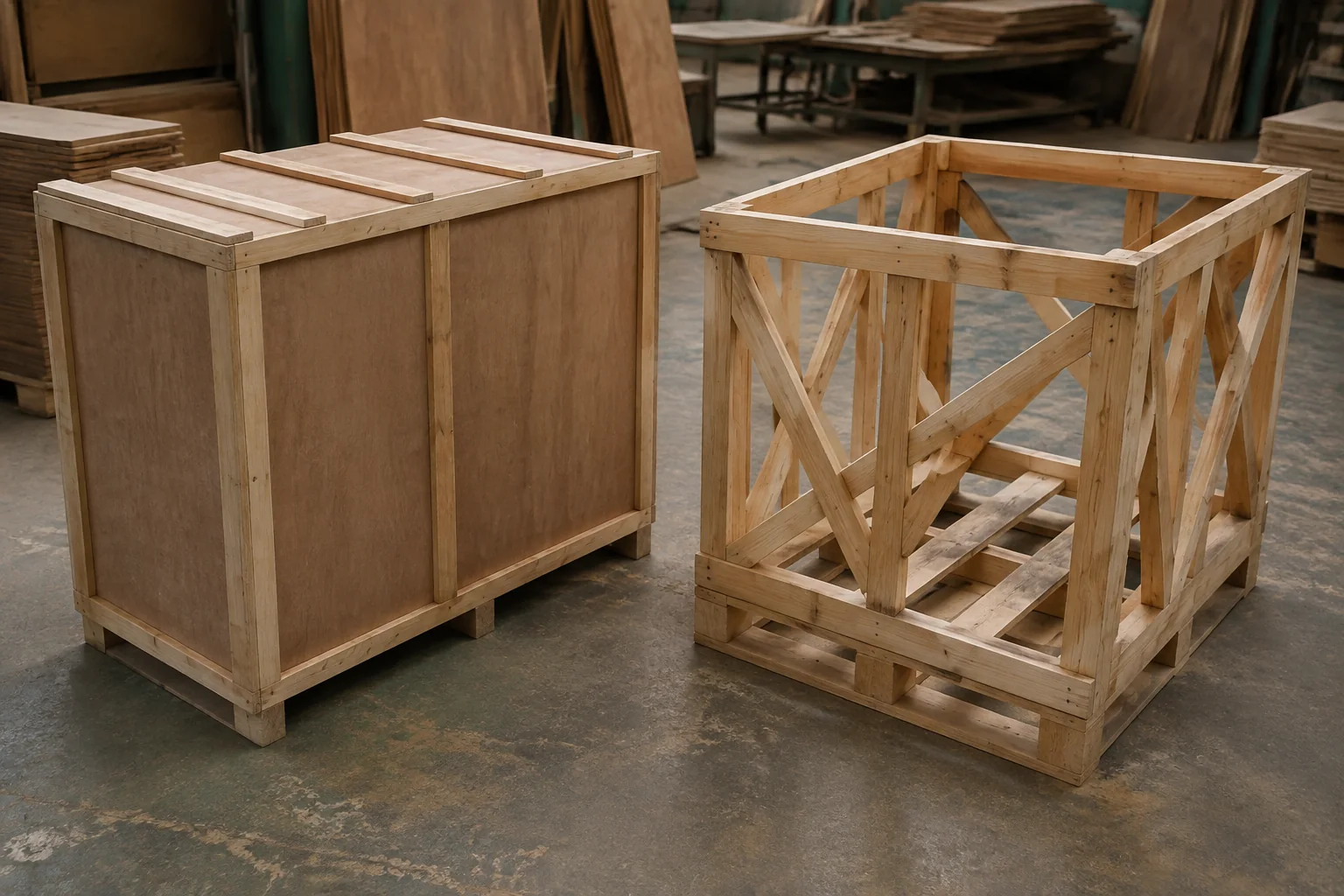
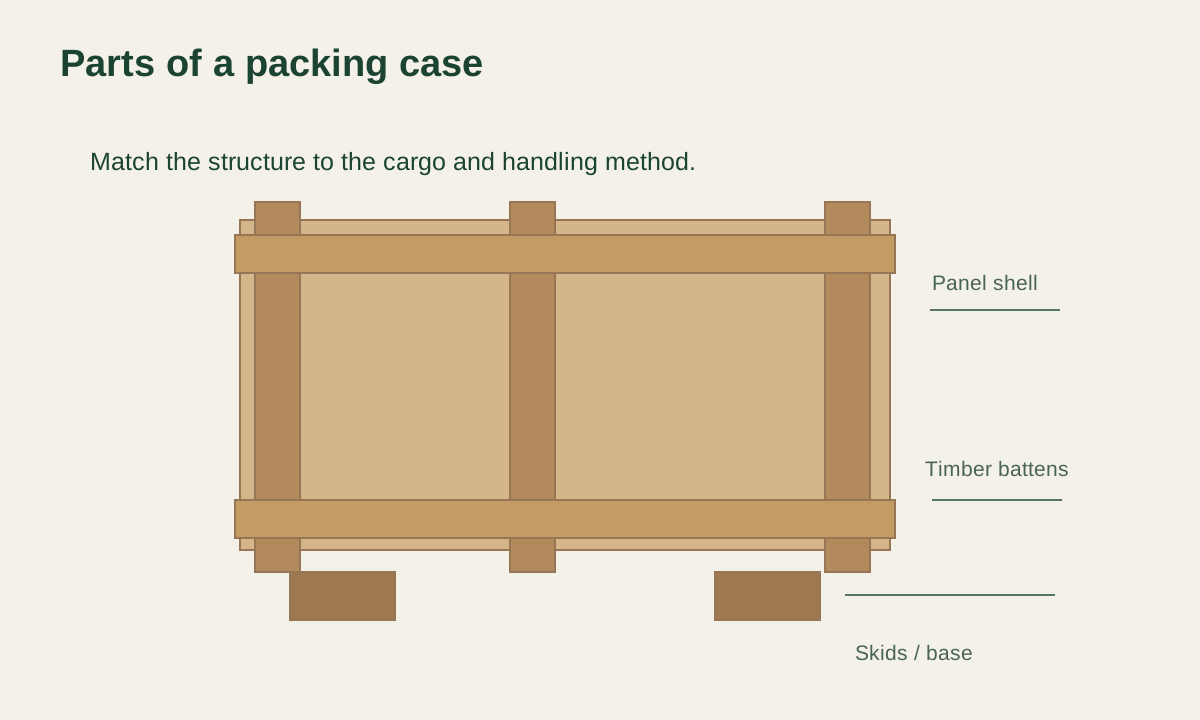
A plywood box is a six-sided enclosure: plywood panels fixed to a light internal frame. The plywood does double duty — it carries load and it seals the contents. You get a closed, weather-resistant package good for protecting sensitive or finished goods.
A wooden crate is a load-bearing skeleton: heavy timber framing (skids, posts, headers, diagonal bracing) that may be left open, slatted, or partly sheathed in plywood. The frame carries the weight; any cladding is secondary. Crates suit heavy, rigid items that can tolerate some exposure but need a structure strong enough to be forklifted, slung and stacked.
In short: a box protects, a crate supports. The weight and fragility of your cargo decide which job matters more.
The weight-class decision matrix
These are general packaging-practice guidelines, not a regulatory threshold — treat the boundaries as overlap zones, not hard lines.
| Gross weight | Recommended | Typical cargo | Why |
|---|---|---|---|
| Up to ~150 kg | Plywood box | Instruments, spares, electronics | Light frame + sealed skin is enough; full protection, low tare |
| ~150–500 kg | Plywood box (reinforced base) | Motors, pumps, control panels | Box still viable; add a skid base and corner gussets for forklift handling |
| ~500 kg–2 t | Sheathed wooden crate | Gearboxes, compressors, small CNC | Timber framing carries load; plywood sheathing keeps weather and dust out |
| 2 t and above | Heavy timber crate / case | Large machine tools, transformers | Engineered timber skeleton with diagonal bracing; cladding optional |
A 450 kg item with delicate electronics leans toward a reinforced box; a 450 kg rigid casting leans toward a crate. The deciding questions are weight, fragility, and how the package will be lifted.
Where each one fails
Knowing the failure mode tells you which to pick.
- Plywood box, overloaded: put a heavy rigid mass in a box sized for light goods and the base panel deflects, the corner joints rack, and the package can collapse under stacking or a forklift tine. The fix is a proper skid base and heavier panels — at which point you are halfway to a crate.
- Open crate, exposed cargo: an open crate gives no barrier against rain, salt spray or handling damage to protruding parts. For a long sea leg through humid ports, unprotected surfaces corrode and finishes suffer. The fix is plywood sheathing plus internal barrier wrap and desiccant.
- Either one, wrong wood: undersized or green timber, or a thin commercial panel where a moisture-resistant grade is needed, leads to sagging skids and delamination in transit.
Material choice: panels and framing
For the panel skin, a moisture-resistant grade matters more than thickness alone on a long sea route. Our commercial and packing plywood, with an Okoume face option, gives a clean, consistent panel for box walls and crate sheathing; thickness is matched to span and load at quotation. For the framing and skids, properly seasoned sawn timber sized to the gross weight does the structural work.
A useful rule: size the base and skids for the load, then choose the skin for the environment. Heavy load drives the timber; humid or long voyage drives the panel grade and the internal barrier packaging.
ISPM-15: the rule that applies to both
This is where exporters get caught. ISPM-15 governs solid-wood packaging material — the timber framing, skids and blocks in your crate or box. The wood must be heat-treated (the recognised schedule reaches a 56°C core for a minimum 30 minutes) or otherwise treated to the standard, then stamped with the IPPC mark showing country code, treatment code and the treatment facility's registered number.
Two practical points:
- Plywood is engineered wood. Because it is manufactured with heat and adhesives, plywood panels are generally exempt from ISPM-15 treatment — but the solid-timber parts of a plywood box still need treated, marked wood. A "plywood box" is not automatically exempt; its frame is what gets inspected.
- An unmarked or wrongly marked package can be held, treated, returned or destroyed at the destination port — at your cost and on your timeline. Confirm the marking requirement for the destination country before you build.
In the plywood boxes and crates we supply, the solid-wood components are treated and IPPC-marked to ISPM-15 by a DPPQS-registered treatment provider where the destination requires it, with a treatment certificate where the quotation states it; matching export pallets and skid bases are available where palletised loading is required.
Cost and strength: the honest tradeoff
Per unit, an open or lightly sheathed crate usually uses less material than a fully closed plywood box of the same footprint — fewer panels, more open frame. But "cheaper crate" is only true when the cargo can accept reduced protection. For sensitive or high-value goods, the cost of a damaged shipment dwarfs the panel saving, and a closed box is the economical choice once you count risk.
Strength is about design, not just box-versus-crate. A well-engineered plywood box with a skid base and gusseted corners can outperform a poorly braced crate. Conversely, a properly braced heavy-timber crate will carry loads no box should attempt. Specify the gross weight, the lift method (forklift, sling, crane) and the stacking plan, and the packaging is engineered around those — not around a label.
When you are ready, request a written quote with your item weight, dimensions, destination and how it will be handled, and we will specify the right construction in writing.
FAQ
At what weight should I switch from a plywood box to a wooden crate?
As a working rule, closed plywood boxes suit goods up to roughly 500 kg, and load-bearing wooden crates take over above that, up to several tonnes. The crossover depends on rigidity and fragility as much as weight — a delicate 450 kg assembly may still want a reinforced box, while a rigid 450 kg casting suits a crate.
Does plywood packaging need ISPM-15 treatment?
The plywood panels themselves are engineered wood and are generally exempt. But the solid-timber frame, skids and blocks inside a plywood box do require ISPM-15 treatment and the IPPC mark. The package is only compliant when those solid-wood parts are treated and stamped.
Is a wooden crate cheaper than a plywood box?
Often yes per unit, because an open crate uses less panel material. That saving only holds if your cargo can tolerate reduced protection from moisture, dust and pilferage. For sensitive or high-value goods, a closed box usually wins once you weigh the cost of transit damage.
Can a plywood box handle heavy machinery if I reinforce it?
Yes, within limits. A skid base, heavier panels and gusseted corners extend a box's working range, and a well-engineered box can outperform a poorly braced crate. Above roughly two tonnes, a purpose-built heavy-timber crate with diagonal bracing is the sounder choice.
What information do you need to recommend a box or crate?
Gross weight, outer dimensions of the item, destination country and port, and how the package will be lifted and stacked. With those, the construction, panel grade, framing size and ISPM-15 marking are specified at quotation.