
Finger-Joint Boards
Finger-joint boards for solid-wood interiors.
Edge- and end-jointed hardwood, kiln-dried and machined flat — for stair treads, table tops, worktops and frames that won't cup or twist. Shipped FOB Cochin.
Specification
The spec sheet, in full.
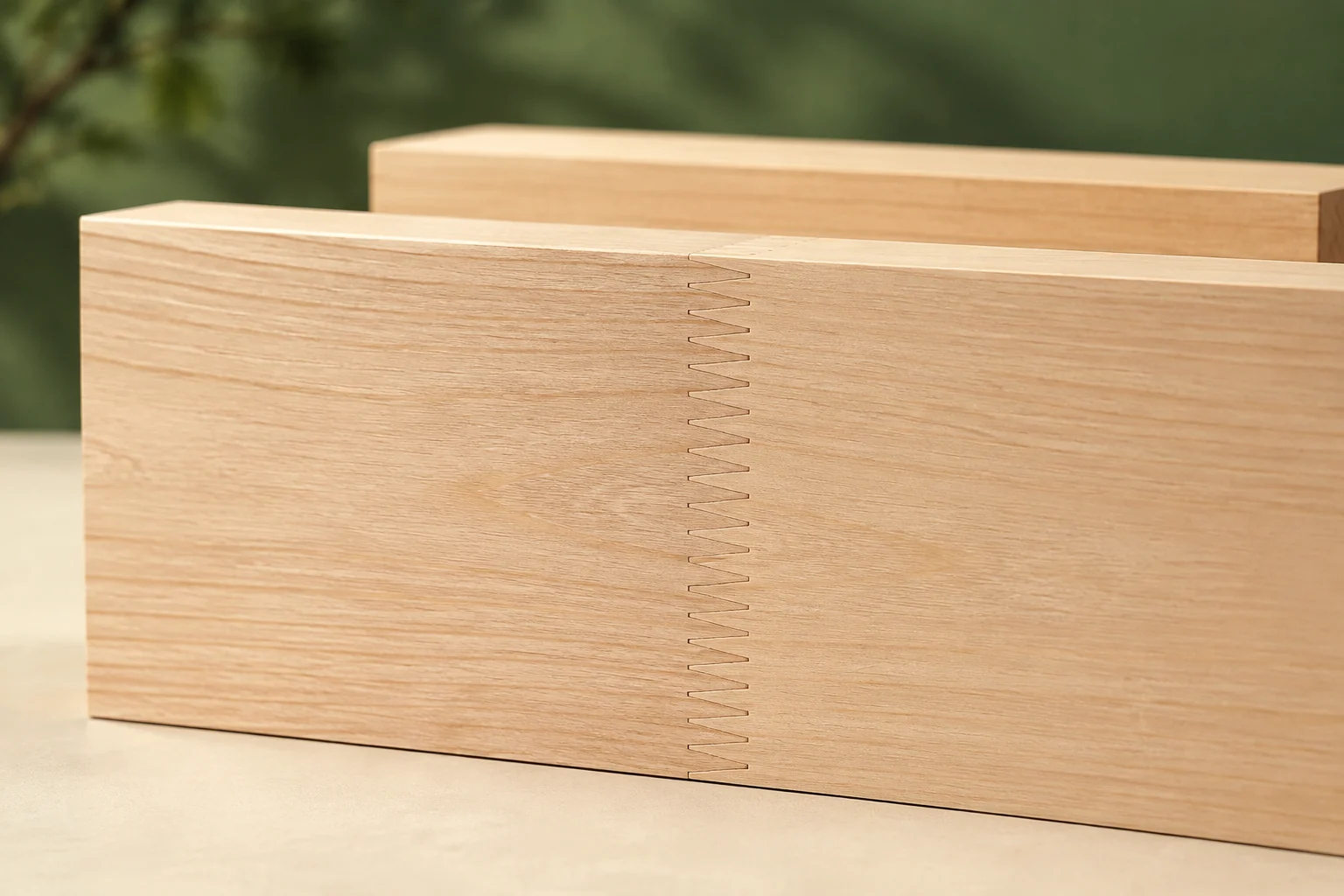
Short staves jointed into long, stable boards — the stress relieved, the grain a solid-wood face.
| Product | Finger-joint solid-wood board (edge- and end-jointed) |
|---|---|
| Species | Rubberwood, mango, mixed hardwoods |
| Thickness | 16 – 40 mm |
| Processing | Kiln-dried, calibrated and sanded |
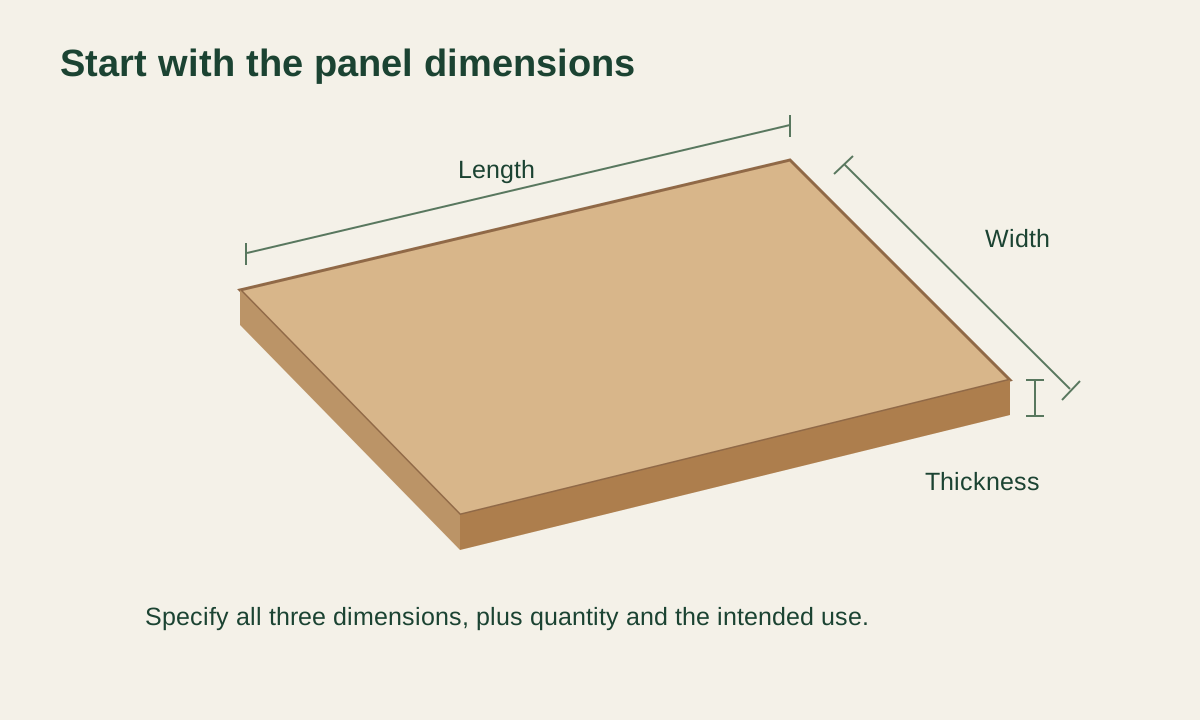
| Sizes | Custom widths and lengths to your cutting list |
| Best for | Stair treads, table and worktops, frames, furniture components |
| Minimum order | India: full truckload ex-factory Perumbavoor · Export: one 20 ft or 40 ft container FOB Cochin Port |
| Lead time | Confirmed at quotation |
Send species, thickness and sizes for a written quote within one business day.
Why finger-joint
Solid wood that behaves like engineered wood.
Stays flat
Jointing short staves relieves the internal stress that makes solid planks cup and twist.
Kiln-dried and stable
Dried to a controlled moisture content, so it holds its dimensions through finishing and shipping.
Cut to your list, FOB Cochin
Made to your widths and lengths and loaded by the container, the same board each order.
Questions buyers ask
Finger-joint boards, answered.
What is a finger-joint board?
A solid-wood board made by joining short hardwood staves end-to-end (and edge-to-edge) with interlocking "finger" joints, then kiln-drying and machining flat — giving a stable solid-wood panel.
How is it different from block board or plywood?
It is solid timber throughout (no veneers or batten core), so it shows a real wood face and machines like solid wood — ideal for treads and worktops.
Which species do you offer?
Rubberwood, mango and mixed hardwoods, kiln-dried, in 16–40 mm.
What is the minimum order?
Within India, a full truckload ex-factory from Perumbavoor; for export, one 20 ft or 40 ft container FOB Cochin Port. Either way, cut to your sizes.
Material and application details
Finger-joint boards
Send the cutting list. Get a number, not a brochure.
Tell us species, thickness and sizes. The export desk replies within one business day.