
IS 4990 is the Indian Standard written specifically for plywood used in concrete shuttering and formwork. It is the difference between "shuttering ply" as a sales word and shuttering plywood as a defined product. If your sites pour concrete against plywood, this is the two-minute version of what the standard requires and what to ask for when you buy.
What IS 4990 actually covers
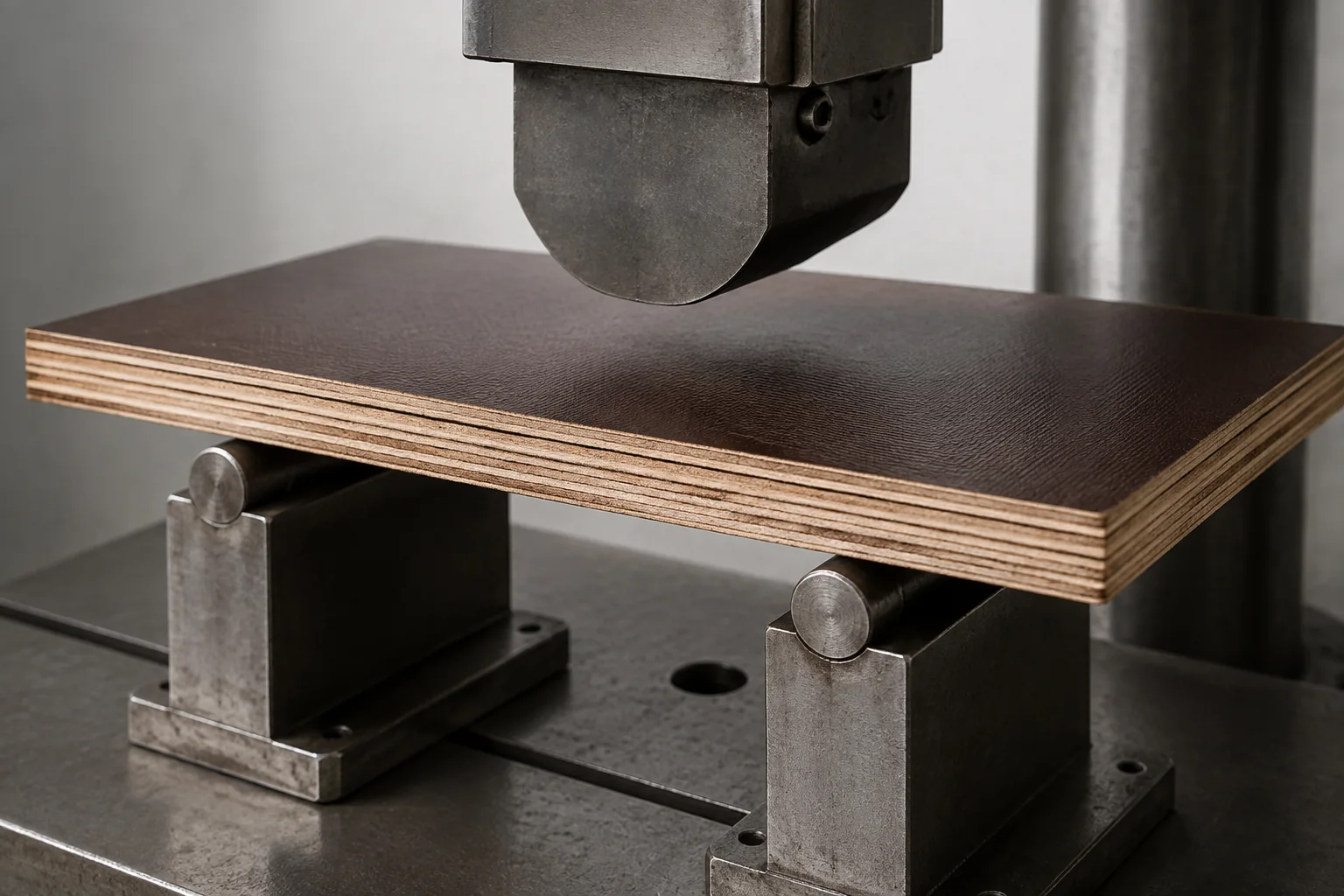
The standard defines plywood for concrete shuttering work: the bonding class, the construction of the panel, the physical and mechanical requirements it must meet, and how compliant panels are tested and marked. In plain terms, it answers three buyer questions — will the glue lines survive wet concrete and steam, will the panel stay flat and strong across props, and can I trace this board to a tested lot?
The requirements that matter to a buyer
- BWP-class bonding. Shuttering plywood to IS 4990 is bonded with phenolic resin of the boiling-water-proof class — the same chemistry family as marine board. Wet concrete, curing heat and pressure-washing are exactly the conditions urea-bonded board fails in.
- Construction for repeated load. The standard sets requirements on the panel build — veneer quality, density and strength properties — because formwork takes load cycles, not just one static job.
- Testing by lot. Compliance is demonstrated by tests — including the boil regime — on samples from the lot. This is what makes a per-lot test certificate possible, and worth asking for with each consignment.
- Marking. Boards made under licence carry the ISI mark with the standard number — the traceable version of the claim.
IS 4990 next to the standards you already know
| Standard | Product | Use it for |
|---|---|---|
| IS 303 | MR / BWR commercial plywood | Furniture, interiors, general work |
| IS 710 | BWP marine plywood | Boats, prolonged wet duty |
| IS 4990 | Shuttering plywood | Concrete formwork |
The IS 303 / IS 710 distinction is unpacked in IS 710 vs IS 303. The practical point: marine board and shuttering board are cousins by chemistry but different products by construction and purpose — buying one to do the other's job pays the wrong premium.
Film-faced boards and the standard
Film-faced shuttering plywood adds a phenolic film over an IS 4990-class panel for clean release and longer face life. The film multiplies the panel's working life; the standard underneath is what the film is multiplying. A glossy film on an uncertified core is cosmetics — judge the board, then the face. How face life translates into site economics is covered in how many pours film-faced plywood lasts.
What to write on the order
"Shuttering plywood to IS 4990, [thickness] mm, [size], film-faced [if required], ISI-marked, per-lot test certificate with delivery." One sentence, every substitution door closed.
FAQ
Is IS 4990 plywood waterproof?
It is BWP-class bonded — built for wet concrete and washing, which is harder duty than rain. Edges you cut on site still deserve sealing.
Can I use IS 710 marine plywood for shuttering?
You can; it shares the bonding class. You would be paying marine-construction premium for a job IS 4990 board is purpose-built and priced for.
Does film-faced plywood have to be IS 4990?
The film is a facing, not a certificate. Ask for the standard and the film — they answer different questions.
What does the ISI mark add?
Licence-backed traceability: the mark ties the board to a certified manufacturer and a testable claim, which is what a project auditor or a dispute actually turns on.
What the Cochin Wood group recommends
Specify the standard, not the nickname. Our HD film-faced and unfaced shuttering boards are manufactured to IS 4990 with per-lot certificates on request — and our desk will say plainly when a cheaper board serves your pour count just as well.
Ask for the spec sheet, or see Film-Faced Shuttering Plywood. For choosing panels against a pour programme, start with choosing shuttering plywood for site builds.