
Plywood Boxes & Crates
Export crates engineered for the cargo, not the catalogue.
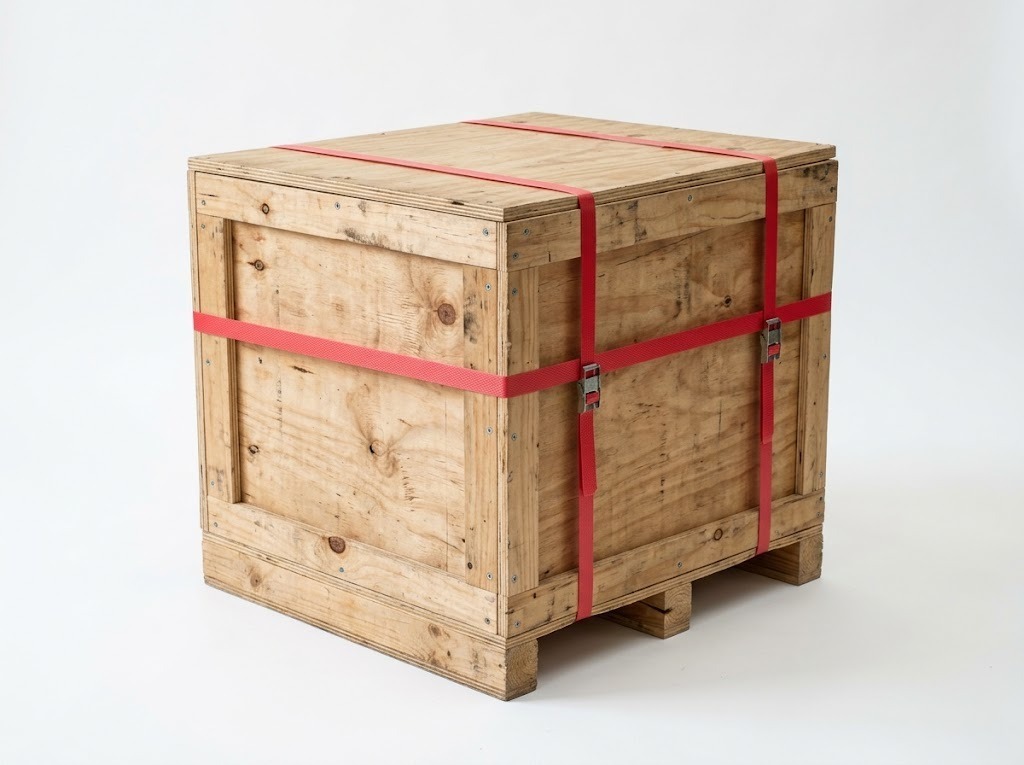
Plywood boxes and crates built around your payload — cushioned, lashed and skidded for sea, air or road, and loaded FOB Cochin with the documents in the pocket.
Specification
The spec sheet, in full.
Engineered to the weight, the centre of gravity and the journey — not to a standard size that nearly fits.
| Product | Plywood boxes & crates — nailed, clip-assembled or collapsible |
|---|---|
| Construction | Plywood panels on a sawn-timber frame, skid or runner base |
| Rated for | Sea, air and road freight; heavy and over-dimensional cargo |
| Sizes | Bespoke to your payload, footprint and centre of gravity |
| Protection | Cushioning, VCI / barrier lining, desiccant, bracing and lashing points |
| Closures | Nailed, clip (re-openable) or fully collapsible / knock-down |
| Treatment | ISPM-15 heat-treated and stamped on solid-wood frame members (plywood panels are exempt) |
| Minimum order | Project quantity, FOB Cochin Port |
| Lead time | Confirmed at quotation |
Send your cargo weight, dimensions and destination for a written quote within one business day.
Why our crates
The box is the last thing between your machine and the sea.
Engineered to the cargo
Panel thickness, bracing and skid sized to the payload and its centre of gravity — not a one-size box.
Collapsible saves freight
Knock-down crates ship flat and assemble on site — less volume out, less cost back.
Paperwork at dispatch
ISPM-15 stamping and certificates issued with the shipment, ready for the destination port.
Questions buyers ask
Plywood boxes & crates, answered.
Do plywood crates need ISPM-15 treatment?
The plywood panels are ISPM-15 exempt because plywood is processed wood. The solid-timber frame, skids and battens must be heat-treated and stamped — which we do, with certificate. Read the full ISPM-15 guide →
Can the crates be collapsible?
Yes — we build clip-assembled and fully collapsible knock-down crates that ship flat and re-assemble on site, cutting return freight and storage.
What is the maximum size and weight you can crate?
Bespoke, including heavy and over-dimensional cargo — we size the panels, frame and skid to the weight and centre of gravity you give us.
Do you provide cushioning and moisture protection?
Yes — cushioning, VCI/barrier lining, desiccant and bracing are specified to the cargo and the journey.
Plywood boxes & crates
Send the cargo. Get a number, not a brochure.
Tell us weight, dimensions and destination port. The export desk replies within one business day.