
Short answer: for Kerala-origin plywood moving to the Gulf, FOB Cochin is almost always the cleaner Incoterm. The goods load at Cochin Port — the natural port for a Kerala supplier — so the seller handles everything up to and including loading on board, and the buyer takes a short, well-served Gulf sailing from there. FCA Mundra only makes sense if the buyer is consolidating other Gujarat cargo or runs a forwarder based at Mundra; otherwise it forces long inland haulage north before the container ever sees a ship.
What the two Incoterms actually mean
FOB (Free On Board) and FCA (Free Carrier) are both Incoterms 2020 rules where the buyer arranges and pays for the main carriage. The difference is where the seller's job ends and the buyer's risk begins.
Under FOB Cochin, the seller delivers the goods on board the vessel at Cochin Port. Cost and risk pass to the buyer once the cargo is on board. From that point the buyer owns the sea freight, marine insurance and import clearance at the destination.
Under FCA Mundra, the seller delivers the goods to the carrier — or to a named place such as the Mundra container terminal — and risk transfers at that handover, before the main sea leg. The buyer takes over earlier in the chain and arranges everything onward from Mundra.
The headline difference: FOB transfers risk once the goods are loaded on board the vessel at the load port; FCA transfers it earlier, at the point of handover to the carrier.
Who arranges what — side by side
| Responsibility | FOB Cochin (seller = Kerala exporter) | FCA Mundra |
|---|---|---|
| Export packing and marking | Seller | Seller |
| Inland carriage to port | Seller (short — Ernakulam/Kochi to Cochin Port) | Seller (long — Kerala to Gujarat) |
| Export customs clearance | Seller | Seller |
| Terminal handling at origin | Seller (to on board) | Buyer (after handover) |
| Loading on board the vessel | Seller | Buyer |
| Risk transfer point | On board at Cochin | At carrier handover, Mundra |
| Sea freight to GCC | Buyer | Buyer |
| Marine insurance | Buyer | Buyer |
| Import clearance and duty | Buyer | Buyer |
The practical takeaway: under FOB the seller carries the cargo all the way on board, so the buyer receives a clean on-board bill of lading. Under FCA the buyer picks up the cargo earlier and owns the terminal and loading steps itself.
Why a Kerala supplier defaults to FOB Cochin
Cochin Port and the Vallarpadam ICTT terminal are the natural load points for engineered wood moving out of Kerala. The distance from the loading yard to the quay is short, the route is familiar, and Gulf sailings out of Cochin are well established and frequent.
Quoting FCA Mundra from a Kerala base means trucking containers roughly the length of the west coast before the sea leg even starts. That adds inland transit days, more handling and more exposure — for cargo that could have loaded much closer to home. For most GCC buyers, none of that buys anything: the destination is the same Gulf port either way.
This is why our standard term for container loads across the plywood and engineered-wood range is FOB Cochin. It keeps the origin leg tight, the documentation clean and the handover predictable.
When FCA Mundra is the right call
FCA Mundra earns its place in specific situations:
- The buyer is consolidating Gujarat cargo. If you are already pulling other goods from western or northern India into a Mundra box, adding Kerala-origin plywood to that consolidation can make sense despite the inland haul.
- You run a Mundra-based forwarder. A buyer whose freight partner is set up at Mundra, with rates and slots locked there, may prefer to take control at that terminal.
- A specific sailing or service only runs from Mundra. If your preferred carrier or schedule to a given GCC port is Mundra-only, FCA there can outweigh the inland cost.
Outside cases like these, the inland leg from Kerala to Gujarat is cost and time you do not need to carry. For most single-origin Gulf shipments, FOB Cochin wins.
How this plays out for packaging and flooring loads
The Incoterm choice is the same whether you are importing finished panels or made-up wooden packaging. A buyer ordering plywood boxes and export crates for re-export packing, or container flooring plywood for trailer and reefer builds, gets the same FOB Cochin logic: load close to origin, hand over on board, keep the paper clean.
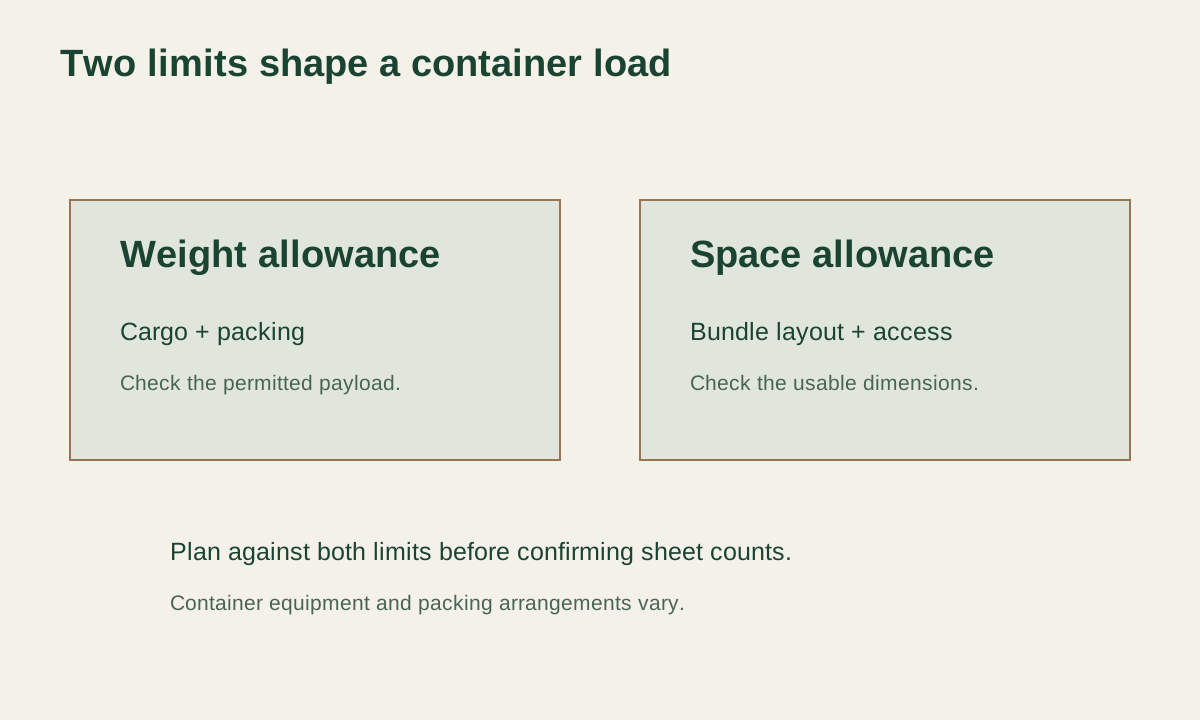
What does change by product is weight and stowage. Heavier made-up packaging and flooring grades fill out a container's weight limit faster than light panels do, so the quoted quantity per box is checked against the weight limit as well as the space. That is confirmed at quotation alongside the Incoterm, so you know exactly what loads and on what terms before you commit.
Documentation and payment that travel with the term
Whichever Incoterm you settle on, the export documentation is prepared so the container moves without paperwork gaps — commercial invoice, packing list, on-board bill of lading, and the certificates your import clearance needs. ISPM-15 treatment marking applies to the wooden packaging and dunnage where required, attributed to the treating facility on the documents.
Standard payment terms are 50% advance with the balance before dispatch, by telegraphic transfer or irrevocable sight letter of credit. Custom-built items are 100% advance. The term you choose — FOB or FCA — sits inside that same payment structure; it changes who arranges the freight, not how the order is funded.
If you want a working comparison for a specific GCC port and quantity, send us the destination and volume and we will quote the term that lands your cargo cleanest.
FAQ
Is FOB or FCA cheaper for a GCC plywood import?
Neither is inherently cheaper — they split the cost differently. FOB Cochin folds the full origin leg into the seller's price up to the vessel; FCA hands the buyer control earlier. For Kerala-origin cargo, FOB Cochin usually lands lower in total because it avoids the long inland haul to Mundra.
Can I get FCA Mundra from a Kerala supplier?
Yes, it can be arranged, but it means trucking the container the length of the west coast before loading. It is worth it mainly if you are consolidating other Gujarat cargo or working through a Mundra-based forwarder. Otherwise FOB Cochin is the tighter route.
Who pays for marine insurance under FOB and FCA?
The buyer, under both. In FOB and FCA the buyer arranges and pays for the main carriage and the marine insurance covering it. The seller's responsibility ends at the named delivery point — on board at Cochin for FOB, at carrier handover for FCA.
Does the Incoterm change the import duty I pay in the GCC?
No. Import duty and clearance at the destination are the buyer's responsibility under both FOB and FCA. The Incoterm decides where in the journey risk and cost transfer, not your duty liability at the destination port.
Which Incoterm gives me a cleaner bill of lading?
FOB, by default — because the seller delivers on board at Cochin, the on-board bill of lading falls out naturally. FCA can also produce one: Incoterms 2020 lets the buyer instruct the carrier to issue an on-board B/L to the seller, which was added for letter-of-credit trades. It just takes an extra arrangement, so FOB is the simpler route to that document.